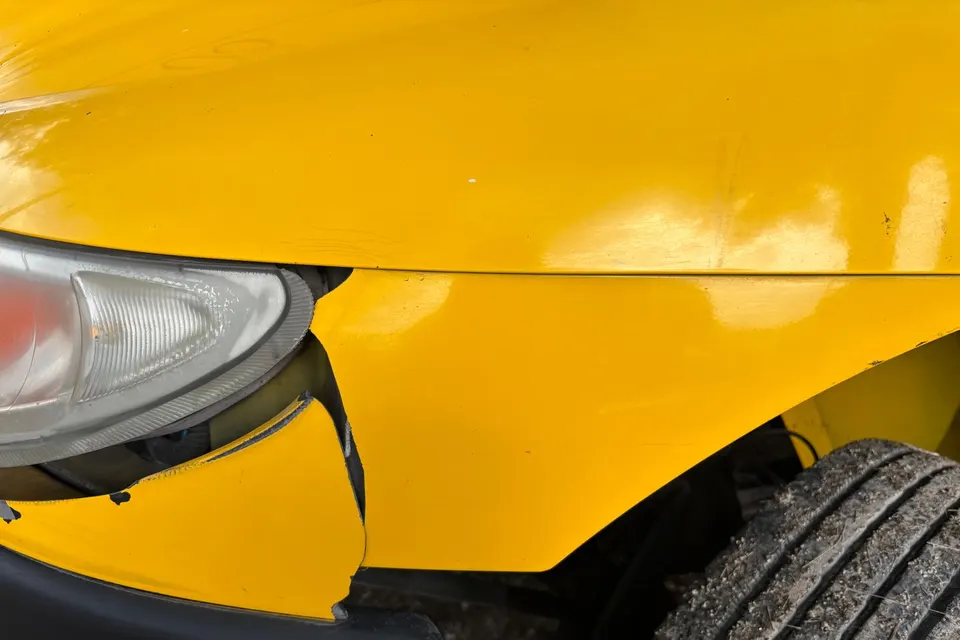
Your own policy usually steps in. Uninsured motorist (UM) coverage pays when the other driver has no insurance or can't be found. Underinsured motorist (UIM) coverage helps when their limits are too low. In Virginia it is part of most auto policies.
You did nothing wrong by being hit by someone who should have had coverage. Your own policy may help. Here is how it works in plain words.
What is UM and UIM coverage?
Uninsured motorist coverage (UM) pays for harm caused by a driver with no insurance. Underinsured motorist coverage (UIM) covers the gap when the at-fault driver's limits are too low.
Under § 38.2-2206 (opens in a new tab), auto liability policies must include UM coverage for sums the insured can recover from an uninsured owner or operator. UM limits are at least the state minimums and generally no more than your liability limits, unless a named insured chooses lower limits by notice. UIM limits equal UM limits, and UIM is paid without credit for the other driver's liability coverage unless the named insured elects a reduction. The statute also sets a property damage minimum of $20,000 per accident, and a policy may exclude the first $200 of loss when the other driver cannot be identified.
How much coverage do Virginia drivers carry?
The minimum liability limits sit in § 46.2-472 (opens in a new tab). Liability coverage is what pays others for harm you cause.
Policy effective
Per person
Per accident
Property damage
On or after January 1, 2025
$50,000
$100,000
$25,000
January 1, 2022 to December 31, 2024
$30,000
$60,000
$20,000
Your own limits may be higher. Find your declarations page, which lists them.
You may also have medical expense coverage (MedPay). Under § 38.2-2201 (opens in a new tab), insurers must offer it on request, up to $2,000 per person for reasonable expenses incurred within three years. Read more on our medical bills page.
What about a hit-and-run?
If the driver who hit you is unknown, § 38.2-2206(D) (opens in a new tab) applies when there was no physical contact between that vehicle and you or your vehicle. To recover, report the accident to your insurer or to a law-enforcement officer where it happened, promptly. If that is not practicable, do it as soon as reasonably practicable under the circumstances. Report as early as you can.
If you want to sue an unknown driver, the statute allows an action against "John Doe." Process may be served on the clerk of court, and your insurer is served as if it were a party. A John Doe suit pauses the limit against the identified at-fault party until that person is known. After that, you must bring an action against them within three years of starting the John Doe action.
Can drivers still pay a fee instead of buying insurance?
The Virginia DMV says that effective July 1, 2024, the option to pay a fee rather than keep insurance on a vehicle was eliminated, and DMV no longer collects the Uninsured Motor Vehicle fee (DMV notice (opens in a new tab)). Current statute text, § 46.2-706 (opens in a new tab), still lists a noncompliance fee of $600, a condition of reinstatement for an owner who fails to submit insurance information within 30 days. The two sources do not match, so confirm the current rule with the DMV or a lawyer.
When coverage may apply
Situation
Coverage that may apply
Other driver has no insurance
Your UM coverage
Other driver has too little insurance
Your UIM coverage
Driver left and cannot be found, no contact
UM, with prompt reporting
Your medical bills
MedPay, if you carry it
What can go wrong?
Reporting late. Report as soon as you can.
Not knowing your limits. Read your policy.
Assuming your insurer will explain everything. Ask questions in writing.
Waiting on the date. The same deadlines apply, so use the checker.
Our picks for you. Firms that handle these cases, chosen by our editors. These are not rankings, and they are not promises about results.
1
Fishwick & Associates PLC
4.8 / 5 on Google Reviews
John P. Fishwick Jr.
Handles personal injury cases involving car accidents, truck accidents, catastrophic injuries, and wrongful death throughout Virginia.
Founder of Fishwick & Associates PLC, a Roanoke, Virginia law firm
Served as United States Attorney for the Western District of Virginia from 2015 to 2017
Practice areas: Car accident · Truck accident · Motorcycle accident · Bicycle accident · Brain injury · Personal injury · and more on the firm’s site
30 Franklin Rd SW Ste 700, Roanoke, VA 24011Directionsfishwickandassociates.com
Call (540) 345-5890Fees: no attorney fee unless the firm recovers compensation on your behalf
Pick 2
Marks & Harrison
Car accidents · Commercial truck accidents · Uber, Lyft, and ridesharing accidents · Motorcycle accidents · Bicycle accidents · Pedestrian accidents · and more on the firm’s site. Spanish spoken.
Personal Injury · Car Accident Attorneys · Truck Accidents · Pedestrian-Car Accident Lawyer · Motorcycle Accidents · Bike Accident · and more on the firm’s site
Is uninsured motorist coverage required in Virginia?
Virginia law says auto liability policies must include uninsured motorist coverage, with limits at least equal to the state's minimum liability limits. A named insured may be able to reject extra limits above those minimums. Check your own policy's declarations page to see what you actually carry.
Does UM cover hit-and-run?
It can. When the at-fault driver is unknown and there was no physical contact with your vehicle, the law asks you to report the accident promptly to your insurer or to law enforcement where it happened. Different rules can apply if there was contact, so read your policy and ask your insurer or a lawyer.
Do I deal with my own insurer?
Yes. A UM or UIM claim is made on your own policy, so your own insurer is involved. That can feel strange, because it is also the company you pay. Stay factual, keep records of every call, and read our adjuster page. If the claim becomes complicated, a lawyer can help.
What is the difference between UM and UIM?
Uninsured motorist coverage applies when the at-fault driver has no insurance or cannot be identified. Underinsured motorist coverage applies when that driver has insurance but the limits are too low to cover your losses. In Virginia, UIM limits are set equal to your UM limits.
Last reviewed · Reviewed by the roanokecrashhelp editorial team